Dean: Bypass Bipartisanship On Health Care
Wednesday, July 15, 2009
 Print
Print Email
Email PDF
PDF My full post out of the first day of the America's Future Now! conference in DC is below. But I wanted to highlight Howard Dean's strong push for a public option, which I wrapped into the story:
During a lunchtime press conference, Howard Dean, recent past chair of the DNC and a doctor, said that it's more important to have a public plan than a bipartisan plan. "Bipartisan," he said, "is not an end in and of itself."
He said that Republicans haven't helped Obama with the stimulus package nor do they seem poised to offer an assist with approving his nomination of Sonia Sotomayor to the nation's highest court.
"If they're in there to shill for the insurance companies, I think we should do it with 51 votes," Dean said, suggesting that it be accomplished via budget reconciliation.
Dean added: "The American people voted for real change. They knew exactly what he was proposing when he was on the campaign trail."
(JENNIFER SKALKA)
Dean: Bypass Bipartisanship On Health Care
[Source: Good Times Society - by The American Illuminati]

Dean: Bypass Bipartisanship On Health Care
[Source: Weather News]

Dean: Bypass Bipartisanship On Health Care
[Source: Wb News]

Dean: Bypass Bipartisanship On Health Care
[Source: Daily News]

Dean: Bypass Bipartisanship On Health Care
[Source: Cbs News]

Dean: Bypass Bipartisanship On Health Care
[Source: World News]

Dean: Bypass Bipartisanship On Health Care

Dean: Bypass Bipartisanship On Health Care
posted by 88879 @ 11:42 PM,
,

No Surprise Here: Three Strikes Law Creates Opportunity For Encrypted VPN Services In France
PrintEmailPDF Permalink | Comments | Email This Story
No Surprise Here: Three Strikes Law Creates Opportunity For Encrypted VPN Services In France
[Source: Good Times Society - by The American Illuminati]

No Surprise Here: Three Strikes Law Creates Opportunity For Encrypted VPN Services In France
[Source: News]

No Surprise Here: Three Strikes Law Creates Opportunity For Encrypted VPN Services In France

No Surprise Here: Three Strikes Law Creates Opportunity For Encrypted VPN Services In France
posted by 88879 @ 11:20 PM,
,
NYT Sees 'Obama's Face' Everywhere, and is Loving it
PrintEmailPDF 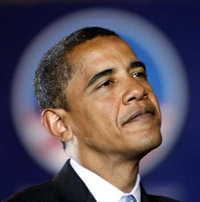 In another nearly orgasmic tribute to The One, in its Arts section The New York Times published a May 30 story buoyantly jubilant over the fact that Obama's face "rules the web." The story is in glee over how the Obammessiah's portrait fills the web and that some folks are even making a bit of cash off the deal.
To my mind, though, the amusing thing about the piece is that, if read closely, it appears that only schlocky Obama art can bring any sales for any serious artistic efforts are going unsold. I don?"t know what that says about Obama art aficionados, but there you have it. Obama schlock rules.
The first Obamanist cum arteeste the piece reveals to us is one Mimi Torchia Boothby of Seattle who was so inspired by The One that she painted a "contemplative, sun-splashed portrait" of Obama that she is now selling on the web. And she was excited that a whole 24 takers was dredged up.
Sadly, there is no sense of proportion about this whole phenomenon and there just is no real effort to place this phenomenon in any historical perspective. Obama is ranked with John F. Kennedy in the excitement for his portrait but, there is no sense that the Times understands that Kennedy's portrait didn't become ubiquitous until his assassination. Yes there were many portraits of him just after he got elected, but his assassination spurred that displaying of his image a lot more than his mere election. On the other hand, Obama's portrait is everywhere despite his relative lack of accomplishment as president.
There is no discussion of other presidents that enjoyed popularity in portraiture. George Washington was hugely popular for generations of Americans including those first American voters of the late 1700s. Just about every American had a portrait of Washington somewhere. Abraham Lincoln was also everywhere in his day and after and was one of the most photographed president's of his era and on into the next. Teddy Roosevelt was the people's president and found great popularity as a subject of portraits. Original images of Teddy are still easy to find on ebay or in antique stores. In his turn, Franklin Roosevelt's image became popular everywhere, as well. But does the Times talk of any of this? Nope.
Finally, one might think that a thoughtful piece on the widespread appearance of Obama's portrait might include some words of caution, some perspective, or some effort to look deeper into the matter. But, I guess that is far too introspective for the Times, sadly. No effort was made to make this piece a serious treatment of the matter.
What does it say, for instance, about people so taken by this man even though he has yet to actually achieve any major effort (shy of getting elected, no mean feat, to be sure), has not faced any significant challenge or emergency, and has yet to be proven to have succeeded in his goals?
But, let?"s not worry about reality, shall we? Unfortunately, it's all about the slavish sycophancy for The One as opposed to any serious treatment of the subject.
Sigh.
NYT Sees 'Obama's Face' Everywhere, and is Loving it
[Source: Good Times Society - by The American Illuminati]

NYT Sees 'Obama's Face' Everywhere, and is Loving it
[Source: October News]

NYT Sees 'Obama's Face' Everywhere, and is Loving it
[Source: Advertising News]

NYT Sees 'Obama's Face' Everywhere, and is Loving it
[Source: China News]

NYT Sees 'Obama's Face' Everywhere, and is Loving it
[Source: La News]

NYT Sees 'Obama's Face' Everywhere, and is Loving it

NYT Sees 'Obama's Face' Everywhere, and is Loving it
posted by 88879 @ 10:52 PM,
,
J.L. Granatstein: Denmarks' high-priced gains
PrintEmailPDF I arrived in Aarhus, Denmark, two weeks ago with the strange feeling that I had really not left Toronto. Tamil demonstrators, waving Tiger flags, banging drums and chanting incomprehensibly, blocked traffic in front of the railway station. A few days later in Copenhagen, their leader dead, their resistance in Sri Lanka at an end, Tamils were chanting "U. S. A., U. S. A." in front of the American embassy. Polyglot Denmark is not, but multiculturalism is present everywhere in the cities.
Most of it is benign and hopeful. There are mixed race children playing happily together in both Aarhus and Copenhagen, teenagers moving in packs and black and white couples walking with small children. There are women in chadors and Muslim men with beards, halal meat shops and kebabs for sale everywhere. But after the controversy over the Muhammad cartoons, there is substantial unease among many Danes. When the cartoons were published in 2006, they were frightened by the rage directed against them in the Muslim world--and the hints of violence they detected from the 4% of the Danish population who are Muslim.
And they worried about the threat to freedom of speech posed by the controversy. More recently, they bitterly resented Muslim Turkey's attempt, in response to the cartoon controversy, to block the Danish Prime Minister from becoming secretary-general of NATO. Only in the face of Danish resistance will Turkey now make it into membership in the European community.
Many Danes look to Canada as a model of multiculturalism -- a country that they believe got it right. But even if almost everyone speaks English, few know much about Canada, and certainly they know nothing about this nation's problems in integrating immigrants or the difficulties with our refugee system. Still, when compared to racial and religious tensions in Britain, France, the Netherlands and Denmark, Canada's multiculturalism looks like a great success.
What does seem clear is that the European community has been good to Denmark, even if the Danes have thus far refused to adopt the Euro as their currency. The tiny nation's GDP per capita in 2008 was $66,760 (well above Canada's at $48,427), and welfare benefits are generous, so much so that most Danes label their welfare state as their country's defining characteristic. Many cynics might declare that Denmark's taxes --"the highest anywhere," I was repeatedly told -- are the true defining fact (and this tax burden is largely responsible for complaints about the costs of trying to integrate immigrants). But the Danish medical care system is good, the emergency room lineups relatively short and cancer operations in first-class hospitals, for example, can be scheduled and performed quickly and well. (Nonetheless, private hospitals advertise their up-to-date facilities at pleasant locations on the coast.) Even more extraordinarily, university students who make it to higher education after tough competition for places get free tuition and a stipend.
Graduate students get the same, and their stipend is enough to live on, no matter their subject of study.
The only drawback in this halcyon paradise? Everything is ridiculously expensive -- notably clothing (though women are nonetheless stylishly dressed), restaurant meals and alcohol. Copenhagen has a number of two-star Michelin restaurants, but there seems a large gulf between the hot young chefs and most of the rest. The food here is good but simple, though fresh fish seems available everywhere and Danish pork, proudly labelled as such, appears on almost every menu. The pastries are good, the breads wonderful.
Unfortunately, a half-pint of Carlsberg costs around 30 kroner ($6.50) and a glass of Italian plonk will run about $12. With gasoline selling for almost 10 kroner a litre, taxi meters in Aarhus start at 30 kronor and even a short trip will hit $25.
On the other hand, the public transit system is first rate, with bus networks and subways operating in Copenhagen and an efficient rail network reaching into the country. If they're not riding their bicycles around town, people will commute a hundred kilometres to get to work and do so without a qualm. Likewise, Swedes take the train from Malmo, just a bridge away from Copenhagen, to work. Danes, in return, go to Malmo to buy houses and apartments, which are much cheaper there than in Copenhagen.
Occupied without a fight by the Nazis in 1940, Denmark drew the appropriate lessons and joined the North Atlantic Treaty Organization as a founding member. It despatched troops to Iraq, and has some 700 soldiers in Afghanistan's difficult Helmand Province. The Danish casualty rate is comparable to Canada's, and people I spoke too worried that the Afghan mission's aims were hopelessly muddled. Others noted that Denmark, proud of its peacekeeping record, had trouble dealing with combat and its costs.
In other words, Denmark is much like Canada on the important issues. Politicians brag about Denmark punching above its weight, but ordinary Danes worry about the economy and the strains posed to the polity by immigration and wonder if their taxes can possibly go any higher.
But it's a sweet life for now, everyone sitting outside at cafes in the sun or lying stretched out in Copenhagen's superb parks. There really is nothing rotten in the state of Denmark.
Historian J. L. Granatstein writes for the Canadian Defence and Foreign Affairs Institute.
font_size(0);
J.L. Granatstein: Denmarks' high-priced gains
[Source: Good Times Society - by The American Illuminati]

J.L. Granatstein: Denmarks' high-priced gains
[Source: Wesh 2 News]

J.L. Granatstein: Denmarks' high-priced gains
[Source: La News]

J.L. Granatstein: Denmarks' high-priced gains
[Source: Wesh 2 News]

J.L. Granatstein: Denmarks' high-priced gains
[Source: Weather News]

J.L. Granatstein: Denmarks' high-priced gains
[Source: 11 Alive News]

J.L. Granatstein: Denmarks' high-priced gains

J.L. Granatstein: Denmarks' high-priced gains
posted by 88879 @ 9:09 PM,
,
O'Reilly compared murdered doctor Tiller to a Nazi, called him a "baby killer," and warned of "Judgment Day"
PrintEmailPDF [T]here's no other person who bears as much responsibility for the characterization of Tiller as a savage on the loose, killing babies willy-nilly thanks to the collusion of would-be sophisticated cultural elites, a bought-and-paid-for governor and scofflaw secular journalists. Tiller's name first appeared on "The Factor" on Feb. 25, 2005. Since then, O'Reilly and his guest hosts have brought up the doctor on 28 more episodes, including as recently as April 27 of this year. Almost invariably, Tiller is described as "Tiller the Baby Killer."
Tiller, O'Reilly likes to say, "destroys fetuses for just about any reason right up until the birth date for $5,000." He's guilty of "Nazi stuff," said O'Reilly on June 8, 2005; a moral equivalent to NAMBLA and al-Qaida, he suggested on March 15, 2006. "This is the kind of stuff happened in Mao's China, Hitler's Germany, Stalin's Soviet Union," said O'Reilly on Nov. 9, 2006.
O'Reilly has also frequently linked Tiller to his longtime obsession, child molestation and rape. Because a young teenager who received an abortion from Tiller could, by definition, have been a victim of statutory rape, O'Reilly frequently suggested that the clinic was covering up for child rapists (rather than teenage boyfriends) by refusing to release records on the abortions performed.
Jed Lewison has the video from some of those 29 segments:

O'Reilly compared murdered doctor Tiller to a Nazi, called him a "baby killer," and warned of "Judgment Day"
[Source: Good Times Society - by The American Illuminati]

O'Reilly compared murdered doctor Tiller to a Nazi, called him a "baby killer," and warned of "Judgment Day"
[Source: Cbs News]

O'Reilly compared murdered doctor Tiller to a Nazi, called him a "baby killer," and warned of "Judgment Day"
[Source: Murder News]

O'Reilly compared murdered doctor Tiller to a Nazi, called him a "baby killer," and warned of "Judgment Day"
[Source: Daily News]

O'Reilly compared murdered doctor Tiller to a Nazi, called him a "baby killer," and warned of "Judgment Day"
[Source: News Argus]

O'Reilly compared murdered doctor Tiller to a Nazi, called him a "baby killer," and warned of "Judgment Day"
posted by 88879 @ 8:34 PM,
,
Multimedia
Top Stories
Sponsored Links

Sponsored Links


